
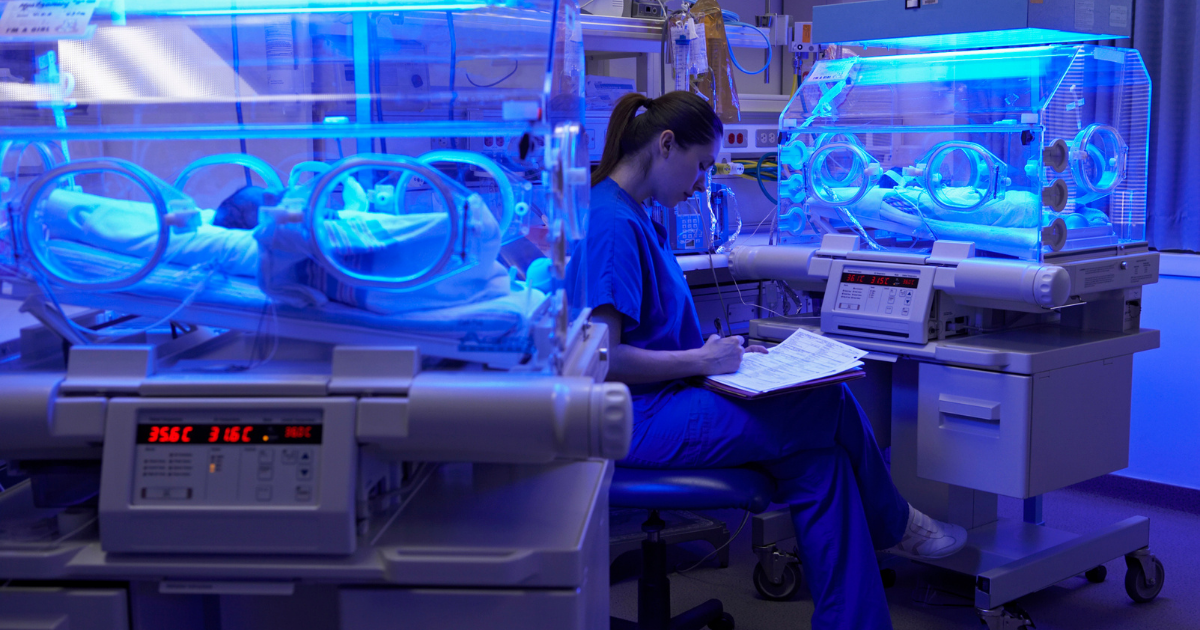
Preterm infants enter the world during a critical period of brain development that would normally occur within the protected environment of the womb. In the neonatal intensive care unit (NICU), however, these infants are suddenly exposed to bright lighting, alarms, equipment noise, and frequent caregiving activities. For neonatal nurse practitioners (NNPs), understanding how the NICU sensory environment affects developing brains is essential to creating a neuroprotective care model that supports both physiologic stability and long-term neurodevelopment.
Why Sensory Exposure Matters for Preterm Brain Development
The third trimester is an important window for the maturation of sensory pathways and cortical connectivity. When infants are born prematurely, their neurological systems must adapt to an environment that is dramatically more stimulating than the uterus. Research has shown that preterm infants in NICUs are routinely exposed to noise peaks, sudden light changes, and environmental stimulation that can trigger measurable stress responses. Even moderate increases in sound or illumination can produce behavioral signs of discomfort and physiologic instability in very preterm infants.
Noise exposure is particularly concerning. Excessive auditory stimulation has been associated with physiologic instability such as apnea, fluctuations in heart rate and blood pressure, and disruptions in oxygen saturation. Over time, persistent exposure may contribute to abnormal sensory development, hearing damage, and later speech or language difficulties.
In addition to physiologic effects, the NICU soundscape often disrupts sleep cycles, an essential component of brain maturation. Studies monitoring sound levels in neonatal units show that infants frequently experience repeated peaks in noise from alarms, equipment, and staff activity throughout both day and night, interrupting sleep during a period of important neurodevelopment.
Recommended Noise and Light Levels
Professional guidelines emphasize minimizing environmental stressors in neonatal units. The American Academy of Pediatrics recommends maintaining sound levels in the NICU below approximately 45 decibels whenever possible. However, observational studies consistently show that routine NICU activities, such as equipment alarms, bin closures, and conversations during rounds, can easily exceed these thresholds. This gap highlights the importance of environmental awareness and system-level interventions to create a neuroprotective care setting.
How to Create a Neuroprotective NICU Environment
Neuroprotective NICU design requires both environmental changes and bedside practice adjustments. Neonatal nurse practitioners play a central role in implementing these strategies.
Reduce Ambient Noise
Noise can’t be eliminated entirely in the NICU, but there are ways to control it. Lower alarm volumes when clinically appropriate, and close incubator portholes and equipment drawers gently. Remove or reposition unnecessary equipment that produces constant background noise. Encourage quiet conversations near patient bedsides, and implement “quiet hours” to protect infant sleep cycles.
Optimize Lighting Conditions
Visibility is important in clinical settings, but when possible, use dimmable lighting to reduce excessive brightness. NNPs should also aim to shield incubators from direct overhead light, and implement cycled lighting that mimics day/night rhythms once infants reach an appropriate gestational age.
Design NICU Spaces with Neurodevelopment in Mind
Ideally, NICUs should be designed in a way that supports infants’ neurodevelopment, such as having single-family rooms that can reduce environmental noise and provide better control of lighting. Additionally, these spaces should feature acoustic ceiling materials and sound-dampening flooring to help reduce background noise. Equipment placement and alarm management systems can likewise limit sudden auditory stimuli.
Promote Protected Sleep
While infants’ care needs can’t always be scheduled, NNPs can aim to cluster certain caregiving activities to minimize repeated disruptions. Similarly, they can pursue positioning and containment strategies that encourage restful sleep states.
The NICU sensory environment can directly influence physiologic stability and brain maturation in preterm infants. But to provide the best level of care to their patients, NNPs also need a supportive work environment. If you’re considering a career change in 2026, allow Ensearch to help match you with the best NICU for you. Get started with a free career consultation today.

